Monday, October 19, 2015

Auditory input: 35 ideas to get you going

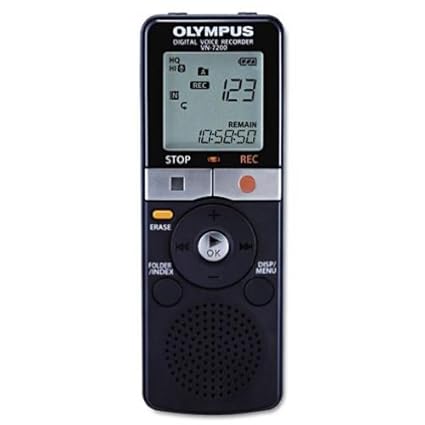
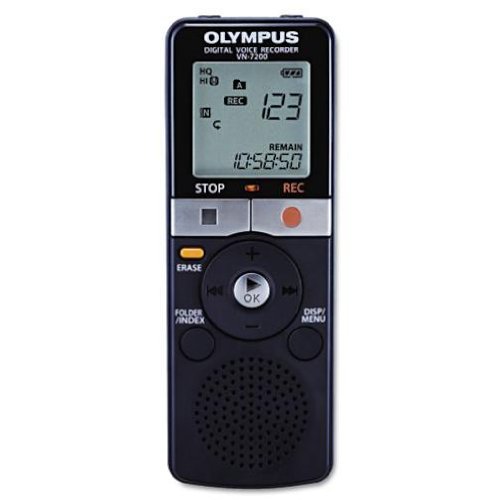
Presley is a very visual little girl. She sees it, she remembers it, and she imitates it.  She is four years old and last month, she began taking ballet classes once a week, so I recorded the routines on my phone and she has learned them fairly well this way.  This is great, but she also needs to keep the visual and auditory input balanced.  We have a great neurodevelopmentist, Lyn Waldeck, with NACD.    This is a personalized program with assessments every 4 months.  Lyn is able to assess and monitor Presley and make recommendations whether we are balanced which allows us to move forward in learning.  Children are naturally visual learners in the beginning.  So, we have to work at increasing the auditory input.   One way we do this is to increase our auditory input is by using a recorder like this.  It can be found here on amazon for $29.95.  Some people use the recorder option on their phone.  Another great tip from warrior mom, Jennifer Cannon, was to record on the phone memo, connect to a small portable speaker ($10) and listen a little louder anywhere.  Presley loves getting ahold of my phone and would begin playing with it if she could, so instead she will push play on this recorder and it goes to the next recording.  So, both good easy options.  I put something she likes first, such a song, followed by something factual to keep her guessing.  I try not to use too many things she has memorized visually so that she doesn't just "play the movie in her head". 

 
Now on to what information we record. 
 
1.  Animal sounds - real sounds or us saying them really silly or here
2.  Family members full names, addresses, phone numbers, birthdays
3.  Days of the week, months of the year
4.  Colors of the rainbow
5.  Spelling words: cat, dog, mom, fish
6.  Appropriate social interactions "Hi, my name is Presley", "please"....
7.  Opposites
8.  Facts about our state: bird, flower, tree...
9.  Fruits versus vegetables
10. Five senses
11. Record bird's songs. On this one you have to say the name of each.
12. Following directions practice "touch your hair, mouth, eye. s".
13. ABC phonics.
14. Our dance routine songs.
15. Self esteem booster: you are smart, loved... or here is a cute story
16. Speech sounds you may be working on
17. Money values - a penny is worth 1 cent,...
17. Planets (song we like)
17. Math: 
      - counting, skip counting, addition, subtraction, even/odd numbers....
      - youtube videos: addition counting with exercies
      - read your flashcards you are working on
18.  Nursery rhymes:
      - I read her favorite nursery rhyme book
      - you tube videos
19.  Books:
     - Rainbow Fish
     - Hungry Catepillar
     - Ladybug girl
     - Move Over Rover
     - Pete the Cat
     - Frozen
     - Chicka Chicka Boom Boom (to music though)
     - Disney's 5 minute bedtime stories
     - We also checked out some at the library for my 6 year old read aloud
20.  Music - our favorite to disperse throughout
     - Readeez - super fun and informative. We have four of the CD's, but you can also check out some of the videos here.
     - Let it go 
     - Strawberry shortcake's Anything is Possible, which is our theme song
     - My Little Pony
     - Do Re Mi or the Sound of Music version
     - Elvis Presleys Suspicious Mind is one of Presley's favorites.
     - variety of instrument sounds: example
21.  Spanish words, colors, counting (or any other language)
22.  States/capitols.  Readeez has a great states song, Pledge of allegiance.
23.  Poems  or artists or fun sayings such as:
24.  Facts: animal facts, state facts (Arkansas for us),
25.  Religious information:
       -  Bible Cd from Readeez  
       -  ABC bible verses - we printed these free cards too
       -  Psalms 23
       - Ten Commandment Boogie
       - Right now media has a lot of Christian stories to see and hear
       - The rizers are on Right Now media and on youtube
       - Read stories from a children's bible
       - we recorded our night time prayer too
26.  Colors:  primary (red, yellow, blue), mixing (red & yellow = orange...)
27.  Using manners appropriately.
28.   Vowels, what a verb is, what a noun is....
29.   When to capitalize letters
30.   Letters and their sounds,  words that rhyme
31.   Greater than or less than number examples
32.   Read a small story and explain WHO, WHAT, WHEN, WHERE.... It has been suggested to stick with one initially, such as WHO.   Discuss the morale of the story.
33.  Talk about safety:  crossing the street, looking for cars, holding hands, staying together...
34.  Cardinal directions:  north, south, east, west (they will remember the words when you apply them to a map.
35.  Look for free children's audiobooks or podcasts. 
 
I looked up some of the recommended learning for their grades on our state education website.  They have a "refrigerator" list for parents showing some of the things children are expected to know by grade.   Here are our lists for  Arkansas .   
 
The options are endless.
 
NACD will be starting a lending library soon.  See here for more information.
 
Here is an article about the importance of a good auditory environment.
 
Hope this gives you some ideas for your own child.  These are right for Presley, based on her NACD assessments, so please remember to use what is appropriate for your child and to check with your neurodevelopmentalist if you are on program.
 
Blessings to you and your family,
Robin


Thursday, October 1, 2015

Find a Vaccine-Friendly Doctor Near You


Some parents choose not to vaccinate their kids.  Others want to partially vaccinate.  Some just aren't sure what they want to do, and they want help figuring what will be best for their child.  If you fit into any of these categories, you may have a hard time finding a vaccine-friendly doctor.  


Please be aware that just because a physician’s office appears on some of these lists, that does NOT necessarily imply that they will be comfortable or supportive of every vaccine decision you make. Some doctors on these lists may not be comfortable with a child remaining completely unvaccinated. Some doctors may not be able to offer a particular brand or form of a vaccine that you may ask for. While the doctors on these lists are here to serve you, you may not necessarily feel that one you choose is a good fit, or vice versa.

In my opinion, if you are with a physician that does not give you options and listen to you regarding vaccinations, find another physician now.  Any physician unwilling to do an alternate schedule which would include all vaccinations being administered over your timeline will most likely be hard to work with in the future regarding any of your concerns.  

Make sure that you read the inserts for all vaccinations prior to administrations.  You can access a full list here.  Regardless of your choice Dr. Sears Vaccine book is a great place to start.


Order here


Criteria for being an "anti-vax friendly doc" 
  • Must not kick patients out of their practice or refuse patients who choose not to vaccinate/selectively vax/delay vax

  • Must not make parents sign waivers that are worded so as to incriminate parents for "putting their child at risk"

  • Must not harass parents every time they have a checkup or harass them through the mail about vaccinations.

  • Must not belittle parents for their decisions or bully them with scare tactics - must respect a parent for their choices.

Cafe Mom's List

Cafe Mom's List 2

 Vaccination Liberation List


VaxTruth List

Additional List


Become educated about childhood diseases and vaccines. You have the ultimate responsibility for your child's health and well-being and you, not your doctor or state or federal health officials, will live with, and be responsible for the consequences of your decision.

Ask your doctor to give your child a physical exam to make sure your child is healthy before you permit vaccination. A sick child can be at increased risk for having a vaccine reaction.

Write down your child's personal and family medical history listing major illnesses and diseases or medical conditions, especially previous reactions to vaccinations, and have it included in your child's permanent medical records. Before permitting vaccination of your child, ask your doctor if any of these conditions will put your child at risk for having a vaccine reaction. A child who has had a previous severe reaction to a vaccination can be especially at risk for even more severe reactions if more vaccine is given. If you are not satisfied with the answers you are given, get a second opinion.

Monitor your child closely after vaccination. Call your doctor if you suspect a reaction. If your doctor is not concerned and you are, take your child to an emergency room.

Obtain a copy of your state mandatory vaccination laws. Become educated about state vaccine requirements, your rights and legal exemptions to vaccination. Click here to review your state law.

Don't be intimidated by medical personnel and forced into a vaccination decision before you are comfortable with your decision.


First, vaccines should only be given when a child is at his or her best health. Second, you should give each vaccine individually whenever possible and available. I feel preparation of your child’s body for each vaccine is extremely important. Finally, consider each vaccine on its merits, your child’s risk factors and age, and/or mandatory requirements

Optimally, before any vaccine is given a child should be completely free from viral and bacterial illness for at least a few days. Whenever possible I recommend he or she be well for one week or more. The reason for this is that the immune system should be as strong as possible before challenging it with a foreign substance to which it must interact by using its immune system to make antibodies, diverting a large portion of the immune system’s resources and energy. Obviously if the immune system has to deal with two stresses at the same time it is more likely to result in either a more severe vaccine reaction or complications to the infection.

If vaccines are given one at a time there is less stress on your child’s immune and detoxification pathways. Inactivated or “dead” vaccines can be given be given every two to four weeks. I currently recommend, however, that the live vaccines: rotavirus, (some) influenza, measles, mumps, rubella and chicken pox (varicella), be given at least six, and preferably twelve months apart from each other unless required otherwise and NEVER combined. Unfortunately, there is currently no means to give individual measles, mumps and rubella. Again, there are times that we may need to modify these recommendations for individual reasons.

One further note: there is now evidence that vaccines are likely more effective, and certainly have a reduced possibility of complications if they are given without over the counter antipyretics such as acetaminophen (Tylenol, Tempra and others) and ibuprofen (Advil, Motrin). Unless absolutely necessary avoid medicating with these preparations. kidsWellness Fever Pain Formula is an alternative that will not have this effect.
Here are several things you may do to help your child’s body to handle any vaccine in a more efficient manner, in addition to careful and judicious use of vaccines. One of these, and in my estimation the most important, is to have him or her take herbal immune support preparations before and after each vaccine. I currently recommend that you use two different herbal products from kidsWellness. (Note: it is not sufficiently effective for a nursing mother to take these herbal preparations to help her infant.)

HERBAL COMBINATIONS

The first herbal combination is the Immune Formula (or a similar preparation containing appropriate full potency doses of three or more immune strengthening herbs) to strengthen your child’s immune system. This combination is taken three times daily for three to seven days before and after each vaccine. Immune strengthening herbs cannot be taken continuously for more than four weeks in a row without checking with a physician knowledgeable in herbal products. If prolonged administration of immune stimulant herbs is necessary because of the number of vaccines being given use kidsWellness Immune Formula for three weeks and then change to kidsWellness Family Daily Defense for one week and then back to the Immune Formula.

The second combination is the Detox/Skin Formula (or a similar preparation containing appropriate full potency doses three or more herbs to strengthen liver, intestine and/or kidney function), one dose daily for the first week, then twice daily for the second week. This should be taken for up to two weeks before each vaccine and should be continued for at least six weeks after the last vaccine is given. This may be continued for whatever length of time is necessary.

In addition, we recommend use of Bio Ray NDF for the duration of the vaccination process. This is to further enhance the removal of toxic products from the body, especially metals, such as aluminum and mercury. This preparation must be taken between meals, optimally two hours after and one hour before eating anything (if this isn't possible schedule mid way between two meals). Start with two drops in 4-8 ounces of organic juice twice daily. Gradually increase to a maximum of one drop per 5 pounds body weight (maximum 26 drops). Continue during the vaccination process and three months after you have given the last vaccine. 


VITAMIN AND MINERAL IMMUNE ENHANCEMENT

Antioxidant vitamins, in adequate doses, either can be given to the nursing mother (if she is not also pregnant) or directly to the child (at certain ages) to enhance immune function.

For nursing mothers I would recommend C Ultratabs (Metagenics, www.rydland.meta-ehealth.com) three tablets daily in two or three doses and Zinc A.G. (Metagenics) three capsules daily in two or three doses. Both the vitamin C and zinc will cross into your milk and into the baby’s system. Unfortunately, Vitamins A and E are not known to be readily transmitted into mother’s milk.

For children over six months who are not nursing I recommend the following vitamins taken for several days before and after each vaccine (about 10-14 days):
    1. C Ultrasorb (Metagenics), 1/8 teaspoon per 20 pounds body weight daily. Preferably this should be given in two or more daily doses
    2. Vitamin E 200 I.U. per 20 pounds body weight in one or more daily doses
    3. Vitamin A 5,000 I.U. per 20 pounds body weight in one or more daily doses.

HOMEOPATHIC PREPARATION

A third method of preparing your child’s immune system for vaccines is for him or her to take homeopathic preparations prior to and after each vaccine. Homeopathic preparations are given by mouth and must be taken at least 15 minutes before and after eating or drinking anything except water. This is usually administered about 15 minutes after a meal is finished, and then must be followed by 15 additional minutes without eating or drinking. The preparation I recommend is from Newton Homeopathics, called “Vaccination Relief” (available through DrRydland@kidswellness.com). 

It should be given three times daily for one week before and after each vaccine.

An additionally recommended homeopathic preparation for vaccines is the “nosode” of the vaccine that is to be given in a two dose schedule, the first dose approximately two days before and the second two days after that vaccine. The dose of these homeopathic preparations for children under 12 months old is three drops or two pellets, 12 months and older is six drops or four pellets per dose. These are preparations that must be ordered through our office or another health care professional.


Educate yourself and make the best decision for your family. These are some of the highlights from this video and give you a starting point to discuss with your doctor.


* Children with DS & ASD have objective differences on brain MRI's.
* Oxidative stress is present in utero (before born) in children with DS
* SOD (superoxide dismustase) produces H2O2 (hydrogren perioxide) in excess since located on 21st chromosome. Glutathione breaks down H2O2 into H2O (water) and oxidized glutathione, but it is not present on 21st chromosome so is not made in same amount as SOD, so glutathione gets used up quickly. So people with DSwill have low glutathione levels.
* Glutathione is a major anti-oxidant made by the body, has anti-viral properties, removes heavy metals, detoxs body from chemicals and pharmaceuticals, and protects DNA and mitochondria from damage.
* Heavy metals (like mercury) upregulate SOD. People with DS already have an upregulated/increased SOD, so both cause lower glutathione levels.
* Mercury can deplete glutathione and contribute to cell death (apoptosis) when glutathione levels are too low. People with DS already have low glutathione levels.
* Mercury can induce cholinergic dysfunction. People with DS already have cholinergic dysfunction present.
* Mercury induces H2O2 (which is already increased in DS due to overexpression of SOD)
* There are studies showing the toxicity of thimerosal (contains mercury) was greatly augmented when cells suffered from oxidative stress induced by H2O2. (Meaning they gave hydrogen peroxide to test subjects to induce oxidative stress then it was greatly increased when they added thimerosal).
* There have been zero studies done using people with increased sensitivity, such as DS.
* Nov 2004 - US gov conceded a vaccine-autism case in court of federal claims "vaccinations aggravated an underlying mitochondrial disorder resulting in features of autism". (People wiht DS have mitochondrial disorders and it is present prior to birth)
* Feb 2007 - Mitochondria in DS have a lower mitochondrial membrane potential which is underlying the presence of a increasing suspectibility of the organelles to damaging agents. (means their mitochondria are at increased risk to damage already)
* Thimerosal (with mercury) induces programmed cell death via the mitchondrial pathway by inducing oxidative stress and depleting glutathione. (Aug 2007)
* Low glutathione level can make people more sensitive to DNA damage from a variety of mutagenic environmental exposures.
* Infections such as ear infections or tonsillitis will decrease serum anti-oxidants and glutathione and therefore increase oxidative stress, so it is not ok to give a vaccine when they are ill.
* Measles and the measles vaccine itself show the same chromosomal breaks/alterations/disturbances in DNA.
* Example of going to Dr and what happens at minute 43.
* In a healthy person, GI will exclude greater than 95% of dietary aluminum. Tissue accumulations will occur in small amounts. Infants may be at risk for toxicity when consuming formulas containing greater than 300 mcg/l. Breast milk has 9.2 mcg/l. Soy has 534 mcg/l. Casein hydrolysate has 773 mcg/l.
* Aluminum absorption in Alzheimer's exceeds controls by 1.64%. Aluminum absorption in DS exceeds controls by 6%. So they will hold on to 6 times more aluminum than the general population.
* Celiac disease in general population is 0.3-1%. Celiac disease in DS is 4.6-13%. 53% of children with untreated (undiagnosed) Celiac disease will not even respond to Hep B, so may be given repeated doses and accumulate even more aluminum. Those children that were treated with a gluten free diet were 95% responsive, so this should be assessed in children more often.
* Children with DS have a 15-20 fold increase for leukemia. "The mechanism for carcinogenesis in DS could be explaiined by our fiindings SODs enhance metal mediated DNA damage induced by H2O2. We conclude that SOD's may increase the frequency of mutations due to oxidatve DNA damage in cells, increasing carcinogenic potential."


Please watch the video for more detailed information and supporting references.


MY PERSONAL RECOMMENDATIONS

Although you certainly can do all of the above, and that is what I would recommend if at all possible, it is often burdensome and complicated. Please remember that vaccines have been associated with several potentially serious reactions and that they should be administered with caution and proper preparation. The above recommendations are all those of which I am aware that are helpful. At a minimum I would recommend the following:

1.      For all babies and children nursing at least four times daily I recommend that the mother take the Vitamin C and zinc as outlined in item 2. above. In addition your child should take the Vaccination Relief homeopathic and kidsWellness Immune Formula alternating with kidsWellness Family Daily Defense and the Detox/Skin Formula to start three to seven days before and after each vaccine and continue as recommended above.

2.      For babies and children who are not nursing or nursing less than four times daily I would recommend the kidsWellness Immune Formula alternating with kidsWellness Family Daily Defense, Bio Ray NDF and kidsWellness Detox/Skin Formula, Vitamins C and A, and the Vaccination Relief homeopathic three times daily to start three to seven days before and after each vaccine and continue as above.

3.      For older children you may substitute Echinacea Synergy (Metagenics) or other similar immune enhancing preparation for the Immune Formula and MedCaps DPO (Xymogen) or other similar detoxification product for the Detox/Skin Formula.


If you or your children experience adverse events from a vaccination please report to 

Vaccine Adverse Event Reporting System (VAERS)


As of 8-15-2015 there have been 20,132 adverser reactions reported to the CDC, click here to access the data from the VAERS database.


Sunday, September 27, 2015

Preschoolers with Down Syndrome Do Not Yet Show The Learning and Memory Impairments Seen In Adults With Down Syndrome.


"Essentially when matched mental age, preschoolers with Down syndrome performed equivalently with controls."

Read that to yourself again.

"Essentially when matched mental age, preschoolers with Down syndrome performed equivalently with controls."

Those are some of the most beautiful words that I have heard since my daughter has been born.  Before I begin and before you get the wrong idea I need to make this statement.  Emmalin is amazing, I love her and everything about her.  If someone offered me a pill to take away her 3rd chromosome I would not accept it.  I would never gamble with changing the core of who Emma is.

There has been study after study supporting TNI (targeted nutritional therapy) and our kids.  I have seen the data with my own eyes on lab test after lab test with Emmalin.  There are many of our kids that are on thyroid support because their numbers reflect that their thyroid is not working properly.  Unfortunately, most of our physicians do not look past 2 or 3 thyroid numbers.  We look at as much of Emma's overall body as possible.

I was at first hesitant to share this but I really want people to get a clear picture of what we are truly dealing with.  Just by adding 2 new supplements and adjusting some others you can clearly see an impact in her neurotransmitters alone.

Emma's lab spreadsheet


Now we are still working on a lot of different areas with Emma and her bodies needs will continue to change as she grows.  With Emma we are dealing with more that T21.  We are also dealing with hypothyroid, homozygous MTHFR gene mutation and a heart defect that did not get repaired for 3.5 months.

Over the next year we are traveling down some new roads.  As long at the research continues to support the decisions that we make and it is of no harm, we will press forward.


 2015 May;18(3):404-19. doi: 10.1111/desc.12225. Epub 2014 Oct 5.

Preschoolers with Down syndrome do not yet show the learning and memory impairments seen in adults with Down syndrome.

Abstract

Individuals with Down syndrome (DS) exhibit a behavioral phenotype of specific strengths and weaknesses, in addition to a generalized cognitive delay. In particular, adults with DS exhibit specific deficits in learning and memory processes that depend on the hippocampus, and there is some suggestion of impairments on executive function tasks that depend on the prefrontal cortex. While these functions have been investigated in adults with DS, it is largely unclear how these processes develop in young children with DS. Here we tested preschoolers with DS and typically developing children, age-matched on either receptive language or non-verbal scores as a proxy for mental age (MA), on a battery of eye-tracking and behavioral measures that have been shown to depend on the hippocampus or the prefrontal cortex. Preschoolers with DS performed equivalently to MA-matched controls, suggesting that the disability-specific memory deficits documented in adults with DS, in addition to a cognitive delay, are not yet evident in preschoolers with DS, and likely emerge progressively with age. Our results reinforce the idea that early childhood may be a critical time frame for targeted early intervention. A video abstract of this article can be viewed at https://www.youtube.com/watch?v=r6GUA6my22Q&list=UU3FIcom6UpITHZOIEa8Onnw.
© 2014 John Wiley & Sons Ltd.


There are many children exceeding the expectations set upon them early in life....all of our children can.


Thursday, September 17, 2015

Auditory Processing: what, when, how

Auditory processing is a large part of our lives.  It is extremely important. Bob Doman with the National Association of Child Development (NACD) describes it best as:

Over the years we have discovered that sequential processing, which is the brain's ability to process pieces of visual or auditory information in a sequence, normally develops in a predictable pattern as a child grows.  As sequential processing develops so does the complexity of thought. A child's ability to think determines their ability to understand, learn and act.  If anything interferes in the development of sequential processing, the child's ability to understand, learn and act will be affected in a number of ways.
The first seven to nine years of life provide the best window of opportunity to learn about the significance of sequential processing because sequential processing - particularly auditory sequential processing - has a lot to do with determining your child’s overall (or "global") level of maturity as well as their ability to pay attention and learn.  When a child comes to us with a label of learning delays, behavior problems, trouble concentrating, or just being immature for their age, the child will almost always be found to display lower than normal sequential processing abilities.  As we correct the delay in sequential processing by teaching the brain to process more pieces of information, we find many learning, behavior and attention deficit problems resolve without further intervention.

Sequential processing usually develops at the rate of one piece of information per year up until about seven to nine years of age. At that point, it tends to stop increasing without specific intervention.   In young children, we can determine their processing level by looking at how many directions they can follow in a sequence.  For example, a child who is between one and two should be able to follow a simple direction like, “touch your nose”, which amounts to processing one piece of information. With a child between ages two and three, you should be able to open a book and ask them, “Where is the horse and the dog?’ (two pieces of information).  When they are three years old, they should be able to repeat three things in a series, such as “yellow, green, and red” (three pieces of information). As the child grows, their sequential processing should continue to advance by one piece of information per year, so that by age seven they are able to process at least seven pieces of visual or auditory information in a sequence. 

Many of the typical challenges parents face in dealing with their little ones relate directly to the child's level of sequential processing.  Up until two years old, or the point at which the child can process two pieces of information, they are very easy to get along with.  Give them something to play with and they are happy; take it away and they will probably still be smiling because they will just redirect their attention from the object to you, processing one thing at a time.  When they hit two, things get interesting because the thought process becomes “I want” or “Don’t want,” and that is the end of the thought because they can't think beyond two pieces of information at one time.  Functionally this produces the “Terrible Twos” in which the child tantrums because they inevitably want something or don’t want something and cannot process a “but” or a “later.”  When the child reaches three years old, you can begin to reason with them because they can process a third piece of information - including that important word “later.”
But children at a processing level of  three are still rather challenging because they hit what we refer to as the “Lock and Block” stage.  At the “Lock and Block” stage, the child can process the concept of  “later” but cannot process well enough to think their way out of a situation they perceive as threatening in any way.  If they perceive something as fun or okay, they are all smiles.  But when faced with new situations, new people, or if you simply ask them to do something without using your friendly little kid voice, they may give you trouble.  And once they have locked and blocked, forget it!  But often, if you wait a few minutes and come back to them with the same request, they will be fine and comply without any difficulty. It all depends on their perception of threat. Around four years old, the brain is able to begin processing four pieces of information, and the child moves out of the Lock and Block stage and into a whole new set of behaviors that keep parents on their toes.  And so the process goes year by year.

Dealing with little ones can be challenging, but the real challenges come when your seven or eight-year-old processes like a four or five-year-old and you start hearing things like, “Johnny is distractible,” or “Johnny isn’t following directions,” or, perhaps, "We should test Johnny for ADD.”  The root of many developmental problems - from language delays to behavior and learning issues - lies in the fact that their sequential processing has not developed properly. The good news is that sequential processing can be increased fairly easily with the proper intervention.
 

You can learn more about auditory processing on youtube here:
You can learn more about NACD here:  


The purpose of this post is to encourage and give parents of younger children new ideas for accomplishing processing and to keep it interesting.  Remember "high frequency and low duration" as our neurodevelopmentalist Lyn Waldeck always says.  She also cleverly recommended putting small bracelets on one arm (correlating with how many processing sessions you need to do that day) and either remove them or switch them to the other arm as you complete each session.   You can fit them in throughout your day when going to the bathroom/changing diaper, stopped at a stop light, putting child in car seat, during bath time with bath toys, or before meals.  You can also a set timer for every 30 to an hour until you get your recommended sessions in.   I made this using old paracord (from my Army days), placed beads on it, and attached it to my purse. You can find both in the craft section of most stores. I move one down each time we do a quick processing session.  It also serves as a reminder when we are on the go. 


I made a cheat sheet with the following ideas, so when it is time to do auditory processing, I just glance at my sheet.  It takes some of the thinking out for me, and ensures I do not repeat one too soon.  These are geared for my 4 year old daughter (DS), but you can adjust accordingly for your child's age and interest.   You could also put each idea on a note card and use a different one each time or take them on the go. I say the number of items that correlates with her processing level, such as "cat, dog, duck" for processing a 3. NACD also has an app called Cognitive coach (link here) for younger children and a computer based program Simply Smarter (link) for older children. No, I am not a NACD rep, but we have used them since my daughter was 6 months old and love the program.

Processing Reference Sheet

1.  Follow commands:

            clap, high five, take a bow, stomp, turn around, jump, arms up, dance, peek a boo, open mouth, close eyes, hug, sit down, wave,  kick your legs, blow kiss, stand up, laugh, point, shake head, shrug shoulders, tap your head,        brush hair, wipe mouth, show teeth, play drum, lift arm,         make funny face, lift leg, puff cheeks, open box, close door

 2.  Repeat words:

            - Colors: red, yellow, blue, white, orange, pink, purple, green, brown, black
            - Numbers
            - Family/friend names:  Mom, Dad, Payton, Mark, Emma, Olivia, Vann, Claire, Michael, Izzy, Blakely
            - Pet names
            - Characters: 
                        * Minnie, mickey, daisy, goofy, pluto, pete, clarabell, donald
                        * Strawberry, Lemon, Plum, Blueberry, Orange, Cherry Jam, Pupcake, Custard
                        * Barney, Bop, BJ, Rip
                        * Cinderella, Rapunzel, Aurora, Tiana, Snow White, Poncahontas
                        * Rainbow dash, pinkie pie, applejack,
            - Animals: 
                        * Pets:     dog, cat, bird, lizard, fish
                        * Farm:    cow, pig, horse, sheep, goat, duck, chicken
                        * Zoo:      elephant, zebra, lion, tiger, bear, monkey, gorilla, giraffe, leopard, rhino
                        * Wild:     wolf, owl, coyote, squirrel, opossum, alligator, snake, turtle, raccoon
                        * Sea Animals: whale, dolphin, fish, manatee, shark, seahorse                       
            - Fruits & veg: apple, orange, banana, kiwi, grapes, blueberry, carrot, broccoli, avocado, lemon, kale
            - Random:  yes, no, maybe, east, west, north, south, up, down, around, on, off, over, under

 
3. Touch body parts:

            Head, shoulders, nose, ears, knees, toes, foot, belly button, teeth, tummy, leg, mouth, eyebrow, hair, head, arm,                hand, finger, cheek, elbow, back
 

4. Treasure Hunt:

Pick items from processing box.  Cover them before asking.  You can turn over cards with colors or shapes.  You can also put small items under separate cups or a lid.  See below for pictures of what is in my "processing box".

5.  Touch objects:

            Couch, piano, refrigerator, floor, window, door, toys, books, rug, foam alphabet letters on floor

 
6. Follow directions:

            Run like a deer, leap like a frog, hop like a bunny, crawl like a snake, roar like a lion, swing like a monkey, waddle like a duck, jump like a kangaroo, gallop like a horse, walk like an elephant

 
7.  Go get 3 items:

            Book, doll, Minnie, toy, blanket, spoon, fork, paper, pencil, crayon, drink, pajamas, towel

 
8.  Show me emotions:

            happy, sad, mad, sleepy, surprised

 9.  Pretend to be a:
            Airplane, train, elephant, duck, pig, gorilla, cat, monkey, wolf, owl, chicken, alligator, dog                             

 
10.  Play with a doll:  feed the baby, wipe her nose, change diaper, tickle her belly, put sock on, brush hair, give bath, make her turn around and hop

 
11.   Reading books:  tell her to touch certain items on the page

 
12.  Changing it up: Magnets on refrigerator. place word or picture cards in pocket charts/Velcro/magnet boards. Family/friend picture cards that you turn over as they tell you who it is.  You can take paint samples from a hardware store and tape to index cards and do the same.  Tricia puts a small piece of chocolate on each card that her daughter gets to eat when she tells her the right name.  Place small items under a cup.  You can send items down a treadmill or slide.  For older children, you could have them help fix a sandwich after telling them "bread, cheese, meat, bread". 


My processing box:
$1 wooden figures from Hobby Lobby


  Small Strawberry Shortcake dolls

 
Craft sticks with Velcro and blocks that fit under small cups
Minnie and her friends, one of her favorites.
The colorful tops off of applesauce pouches.

Random assortment she finds interesting.

Paint samples taped to index cards so back is blank.

Some of the processing cards I carry in my purse.


Here are some example videos of processing:
(may not play on iphone)


Here is Blakely.  Her mom used family photos with
magnets on the back and a baking pan.  How creative!


Please post your ideas, so that we can all learn. 
Many blessings,
Robin