In 2014 Laura Kasbar's speech and language program that she created became available to all of us. Gemiini, which offters educational videos for people on the autism spectrum, brain injuries, Down syndrome and other types of learning disabilities. After Emma started showing signs of echolalia we thought it would be a great addition to our daily routine. Gemiini has certainly proven that video modeling intervention is one of the most effective way to promote speech. Studies have proven that video modeling is a viable intervention. Video modeling and word identification in adolescents with Autism Spectrum Disorder
To best describe what Gemiini is and why is was created please check out this video.
Recently Gemiini created a series of videos called The Language Pyramid-Growing a Confident Communicator, which illustrates the language development process. Please take the time to watch these short videos for better understanding.
Video 1: The Language Pyramid-Growing a Confident Communicator
Nutrition is so important for children, but having the extra chromosome can cause difficulties with the immune system. We encourage a diet low in sugar and grains and without MSG, GMO's, artificial colors, processed foods, or gluten. We do this as a family, because it improves all of our health and sets up Payton (neurotypical) and Presley (our 4 year old with DS) for healthy choices throughout their lives.
Now, for our morning routine. Shortly after Presley awakens, she is given her Naturethroid crushed with a small amount of applesauce. This is more effective when given alone, so we wait a minimum of 30-45 minutes before giving anything else. This is the time I spend preparing everything.
We began introducing smoothies to Presley as soon as she stopped breastfeeding. It helped naturally thicken the liquids, so she has never had to use a thickener. This made it easier to get vitamins in without a fuss.
Presley's smoothie:
Ingredients:
Coconut or almond milk banana 1 grapes - good for fiber and polyphenols avocado - 1/2 - this makes it very creamy, rich, and thick - occasionally carrot - 1 sm - med, sometimes I use the small baby carrots if store was out cilantro, spinach, or kale - keeping a variety blueberries - wild, usually frozen mixed berries - strawberries, blackberries, raspberries bee pollen 1/4 tsp - contains 22 amino acids aloe vera - 1 tsp - for constipation local, raw honey - 1 Tbsp flax oil - 1/4 - 1/2 tsp black cumin oil - splash - adult dose is 1 tsp almond butter - 1 Tbsp elderberry syrup - 1 Tbsp, immune modulator, homemade, when exposed or not feeling well royal jelly - 1/2 tsp cinnamon - dash
I also put her vitamins in: probiotics, vitamin C, vitamin D, acetyl L carnitine, PC, vitamin E, ECGC, leucovorin, circumin w/resveratrol, fish oil, and magnesium.
When I have these on hand, I like to add goji berries and sometimes the thermos cereal.
Everything gets mixed together in the Nutribullet. I have used this one for 3 years many times a day and it still works great.
It took awhile to convert from plastic cups, but we switched to glass jars with stainless steel tops and straws. Later on, I found this stainless steel cups with different color bands around them. This obviously fills Presley up for awhile, so I also prepare Payton a snack until breakfast is officially made.
Payton's morning snack:
Frozen blueberries Elderberry syrup Organic, dark chocolate (80% cacao) - 1-2 pieces (it isn't a reward or treat, it is just part of her morning routine) Fresh fruit: apple, orange, grapes, kiwi, banana, or strawberries Applesauce with:
probiotics
fish oil
royal jelly
local, raw honey
vitamin C powder
cinnamon
chia seeds - 2 tsp - let sit in refrig and it will thicken it
Payton will drink one of these: kefir, milk, herbal tea, or komboucha. I sometimes make her smoothie using komboucha and add all the vitamins instead of giving applesauce.
An hour or so after this, the girls will eat gluten free oatmeal with 1 tsp sunbutter, 1 tsp honey, sprinkle of cinnamon, and 1/3 cup almond or coconut milk yogurt.
In the meanwhile, I also enjoy a almond milk smoothie with almond or sunbutter, berries, carrots, cilantro, kale, spinach, coconut oil, chia seeds, avocado, pure greens powder, aloe vera, and flax oil. If we only took care of ourselves as well as we do our children.......
Here is a picture of Presley helping prepare her smoothie in the morning. It is more than teaching nutrition and good eating habits. We cover counting as she practices her fine motor putting the grapes in. She learned all the different types of berries and reads each label while practicing pronouncing each. We review different shades of same colors as they berries are slightly different. She practices pouring into containers. She gets told the carrots help her eyes as well as ...what the others do. We discuss things that are cold versus room temperature. She learned that green things are actually good. We talk about adding a rainbow of colors. We each have a smoothie so she learned left, right, and middle and comparing big versus small. Lastly, she takes pride in knowing she helped make her own morning drink. Yes this takes longer, but learning can happen anywhere
Yes, I am a stay at home (retired military/PA) mom and have the privilege of being able to do this each morning. My husband also enjoys a morning smoothie. So, I prepare most of it the night before and add the frozen fruit and blend it each morning.
Please let me what ideas you have to help keep your kids healthy.
According to the U.S. Centers for Disease Control and Prevention, about 20 percent of all American adolescents and teenagers are obese. Poor dietary choices and a low level of physical activity are major contributing factors to the childhood obesity epidemic in the United States. Children with Down syndrome have been reported to participate in less physical activity than other children, including children with developmental delays and intellectual disabilities without Down syndrome. This lack of physical activity likely contributes to the higher numbers of overweight and obese children and adults with Down syndrome. (source)
We all know the benefits of exercise, but these benefits can mean even more for our children with Down syndrome as it encourages muscle strength, better balance, increases endurance, and establishes a foundation for a healthy, active lifestyle.
As with anyone beginning an exercise program, please discuss with your child's pediatrician before beginning. You should also consider your child's health, interest, limitations, abilities, strengths, weaknesses, balance, and time. You could also gather input from your child's therapists, such as the physical therapist. If your child has low energy levels, evaluate their thyroid status, nutritional status, and diet with a professional.
Need help getting started? Here are some suggestions that work for us. We usually begin our day with yoga. If you live in an area with limited internet, you can download the videos from youtube to your computer for free and have access to them anytime. When you find a video on youtube you enjoy, put "ss" in front of the word youtube in the webpage address box. If it says "www.youtube.com/star" then you simply change it to "www.ssyoutube.com/star " and hit the download button. Too easy!
Here are Payton and Presley teaching yoga to their dolls. They even made their own yoga video.
They also made their own exercise video using a storybook with minutes of yoga and 6 minutes of exercises using the fit deck cards.
Some ideas to get your family moving and make it fun:
*Cosmic Kids - super fun yoga for all ages. She dresses up and takes kids on a storybook like adventure each session. All videos are free on youtube.
*Yoga Kids - "YogaKids empowers children and teaches them the skills to better care for their bodies, access and interpret feelings, manage stress, solve problems, and connect to others". Videos for different ages and learning, such as Silly to Calm, ABC's, etc... I found their videos much cheaper here on Amazon though.
* Dance X - fun dance moves, but maybe a little fast the little ones. Here is a clip showing several of the dances.
* Debbie Doo and Bounce Patrol - my daughter's favorites to watch. They encourage lots of movements to fun children's songs. Favorites Star Jump and Hokey Pokey on youtube.
* Happy dance by The Learning Station - fun to dance too. Short video with lots of movement to music.
* Fit cards - the girls get to pull out a card to choose an exercise to do. This could travel easy also. Costs $7.95.
* Magic Moves Microphone - the kids push a button and it tells them what move to do, such as "gallop like a horse" or "stomp like a dinosaur". This encourages good listening too.
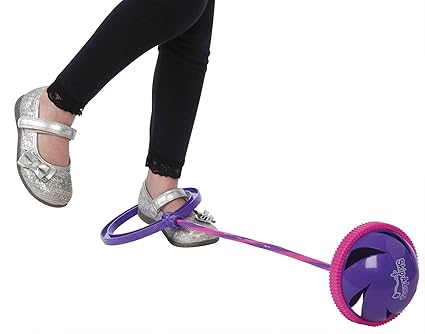
* Skip A Long - the rope is around one ankle while the other foot jumps over it. It does require balance and coordination of timing, so better for older kids.
* Small indoor trampoline - encourage them to jump (if no contraindications for health, such as neck instability, and be cautious with children who stim as this may encourage peripheral vision play). It is fun to do auditory processing (see previous post) before each jumping episode.
* Obstacle course - inside or outside. We set it up inside using these fun soft play blocks. Here is an example of a fun outdoor one. We do "follow the leader" and my 4 year old follows my 6 year wherever she goes. You could also make a small circuit training and have a sign for each even and use a timer to change stations every 30 seconds. Here is a short clip of ours in our home:
(See previous post here how insurance paid for this equipment)
* Jump rope
* Hopscotch - draw it in the dirt or on a sidewalk using chalk or use tape on your floors when indoors
* Walking - hiking - we call this our "Nature therapy" when we go walking through trails, by the river, or around the farm. We talk about everything we see. Sometimes I give them a list of items for a scavenger hunt to make them memorize things. We stop and write words or math problems in the dirt as we go.
* Biking - see this article how 30 minutes 3 times a week improved speech, dexterity, and IQ using "assisted cycle therapy". So strap them into their Smart Trike and get those legs moving as you push the little ones.
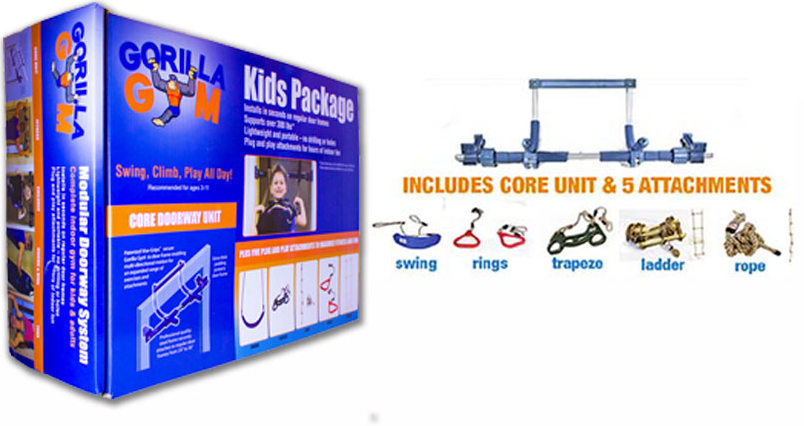
* Indoor gym - We love the indoor Gorilla Gym they got for Christmas. It has a trapeze bar, climbing rope, ladder, and regular swing. You can also attach a platform swing. It attaches to your door frame without making any holes into the frame and can hold up to 300 pounds. Pretty good indoor play for $150. See here:
* Basketball - we use a heavier cushioned ball indoors to build upper body strength.
* Balance beams - place a 2x4 piece of wood on the ground or use one like this.
* Dance class - see Presley 4 year old (DS) doing her routine here. It is always a fun work out for her and socializes her too. At home, put bubble wrap on the floor and have a loud dance party.
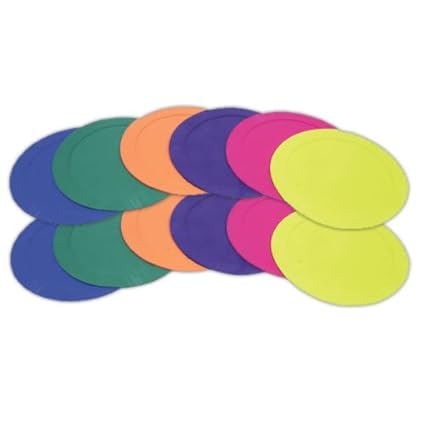
* Vinyl color dots on the floor. This creates unlimited possibilities from jumping, auditory processing, colors, counting, or just letting them use their imagination. We found these on Amazon for less than $20.
* Using tape on the floor for kids to follow: (thanks Pinterest)
Hex cap screws and the nuts and washers that fit them are found at most home improvement stores. I found a combination of these at Home Depot for less than $10.00. My original sizes were:
3/4" x 3"
5/8" x 2 1/2"
1/2" x 2 1/4"
7/16" x 2"
3/8" x 1 3/4"
5/16" x 1 1/2"
1/4" x 1 1/4"
1/4" x 1"
1/4" x 3/4" and
1/4" x 1/2"
But after much searching and running out of snacks for Olivia and Emma I put a group together based on longest to shortest with as much variety that I could formulate. Below is what it looked like. I purchased two sets, one for each little darling.
Your child can do lots of cool things with the washer and nuts in addition to attaching them.
We started by inserting them into floral blocks based on tallest to shortest.
From there we added the washers...this got a little tricky when they realized the larger ones fit on all or most of them. So I had them line them up based on size again.
Made things a little easier.
From there we screwed on the bolts. Emma certainly surprised me on this one...she did great and was very patient.
From there we pulled them out and rearranged them in different orders. Talked about tallest, shortest, heaviest, lightest, left, right and middle.
All these objects naturally provide lots of chances to count, and my kiddos love to count. When counting we make sure we touch and count in synch. This 1:1 association is very important for math skills development and understanding.
You can introduce all kinds of new words while your child is using these materials. Examples include: Largest, smallest, larger than, smaller than, shortest, longest, wide, thin, round, straight, edge, corner, point, side, face, cube, rod, circle, heaviest, lightest, hexagonal and rectangular prism (as Olivia loves to correct me on).